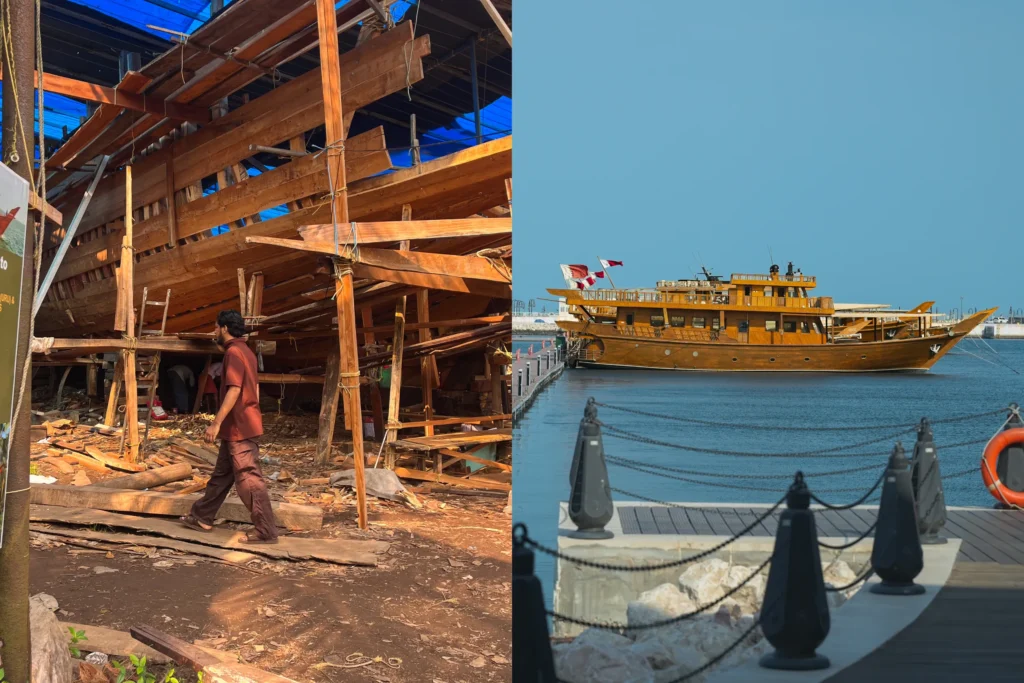
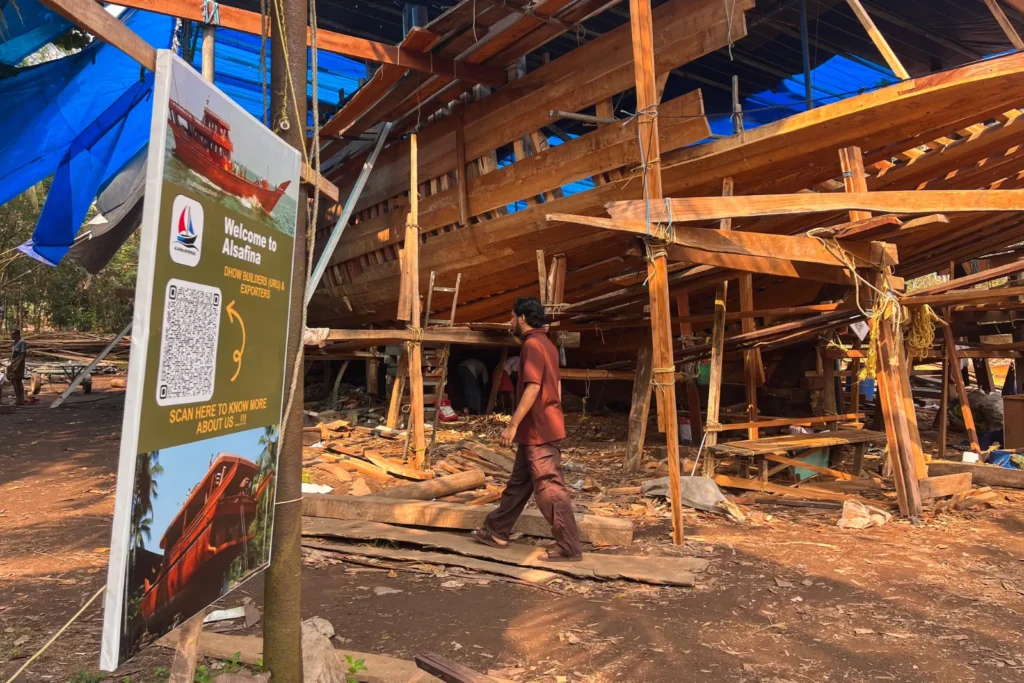
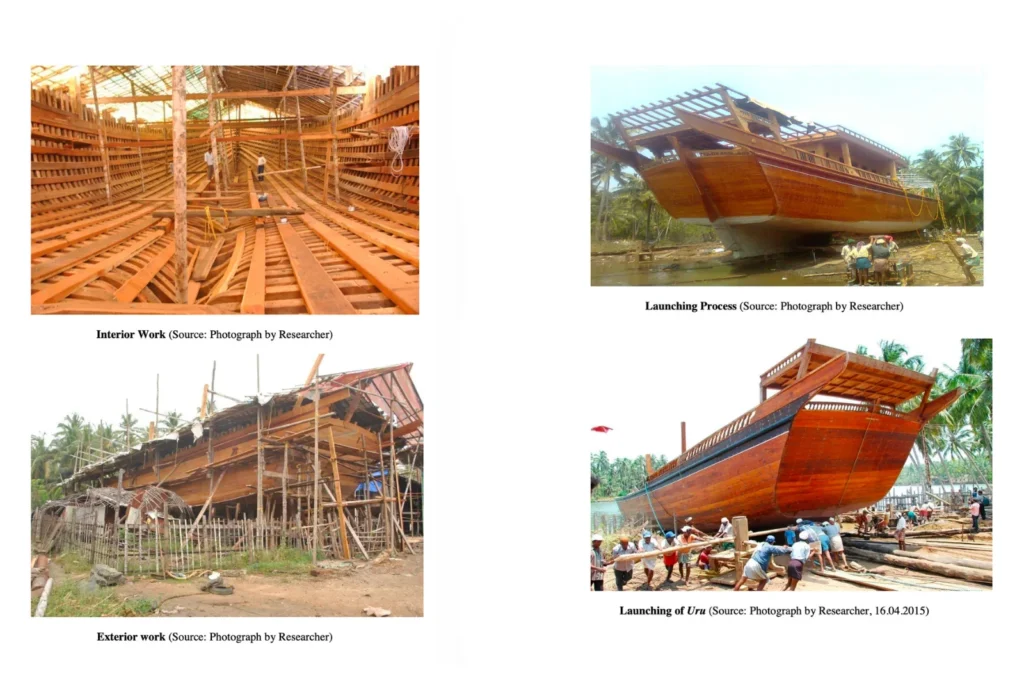
Hammers on teak. Ropes pulling a ship the size of a building. No machines, no engines.
This is how a ship is launched in Beypore, before it sails to Qatar.
This is my Beypore to Qatar blog: the journey of a wooden Uru made by hand in Kerala for the royal households of Qatar.
What does a small town in Kerala have to do with Qatar’s maritime history? More than you might think. It all starts with a wooden boat built in Beypore.
Table of Contents
Beypore: Where the Uru Began
Uru making in Beypore is a centuries-old tradition, said to go back to when India first began trading by sea with Mesopotamia.
It is said that the Yemeni traders who settled in Kerala practiced the art of Uru-making which was gradually passed on, over generations, to the people of Kozhikode. Dhow (Uru in Malayalam)-making was a flourishing industry during the Zamorins,
the kingdom that ruled the Malabar coast from the 12th to the 18th century AD.
Significance of Uru: Boat making Craft at Beypore
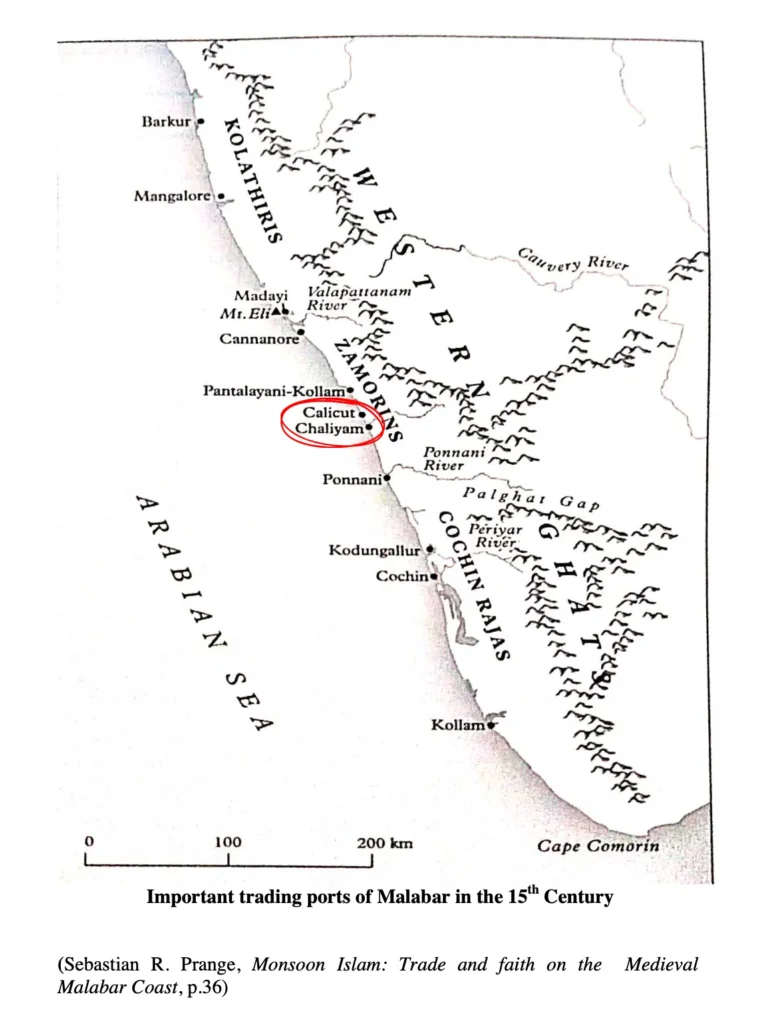
The Beypore port in the Malabar is an estuarine port, where Beypore river discharges into the Arabian Sea.
Beypore port is a Sub-port of Kozhikode port and is situated
approximately 10 km south of Kozhikode.
it is one of the oldest ports in Kerala from where trading was done to the Middle East.
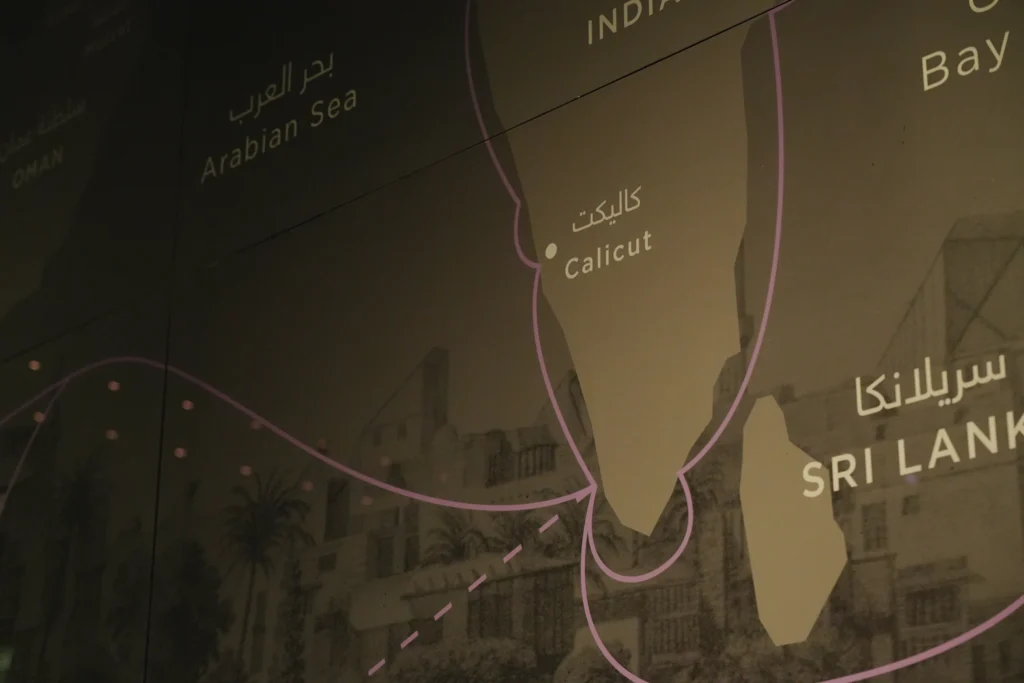
Beypore marked on a historical map displayed at the Museum of Islamic Art, Qatar.
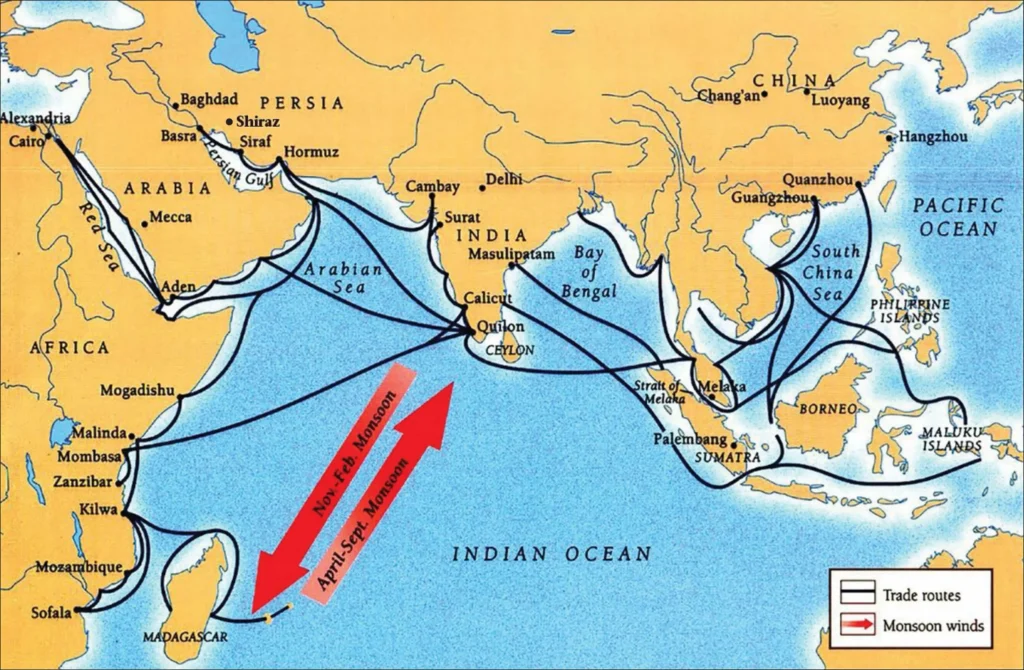
Uru building in Beypore near Calicut was not a sudden industrial development. Instead, it was a gradual historical development. It was influenced by the geographical factors such as estuarine port, monsoon winds, availability of variety of timbers and river transportation.
Monsoon winds and historic trade routes connecting Malabar to Arabia.
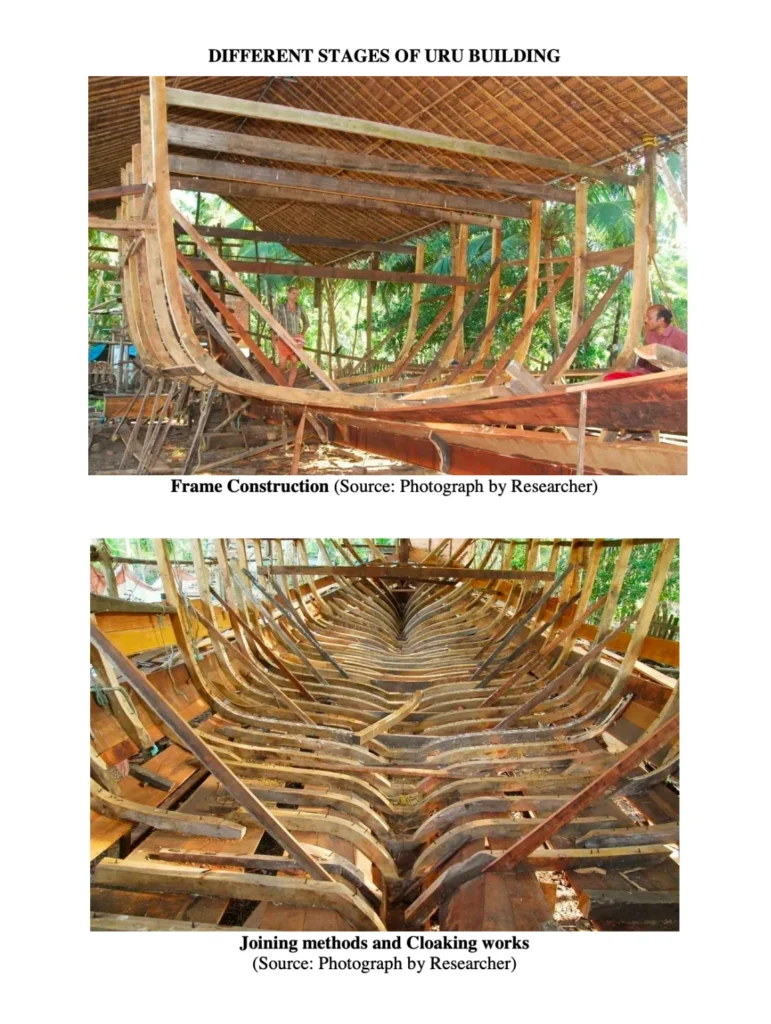
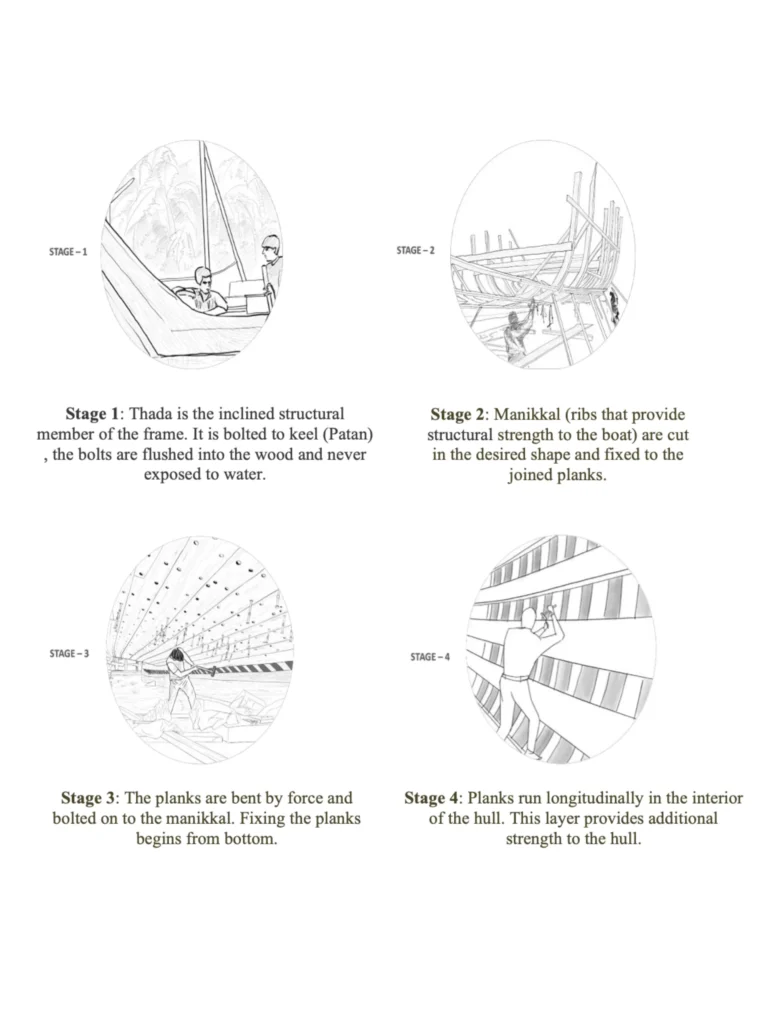
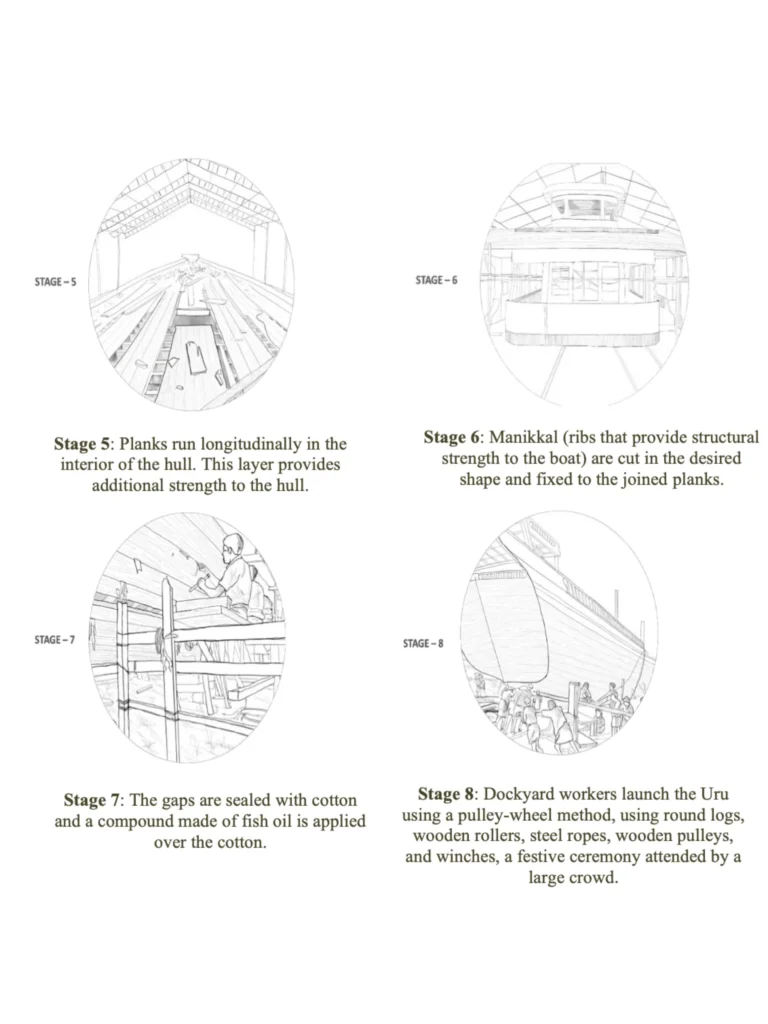
Process of Uru Making
Urus are constructed by institutive knowledge by master craftsmen using a set of thumb-rules. They are then categorized in different shapes and designs.
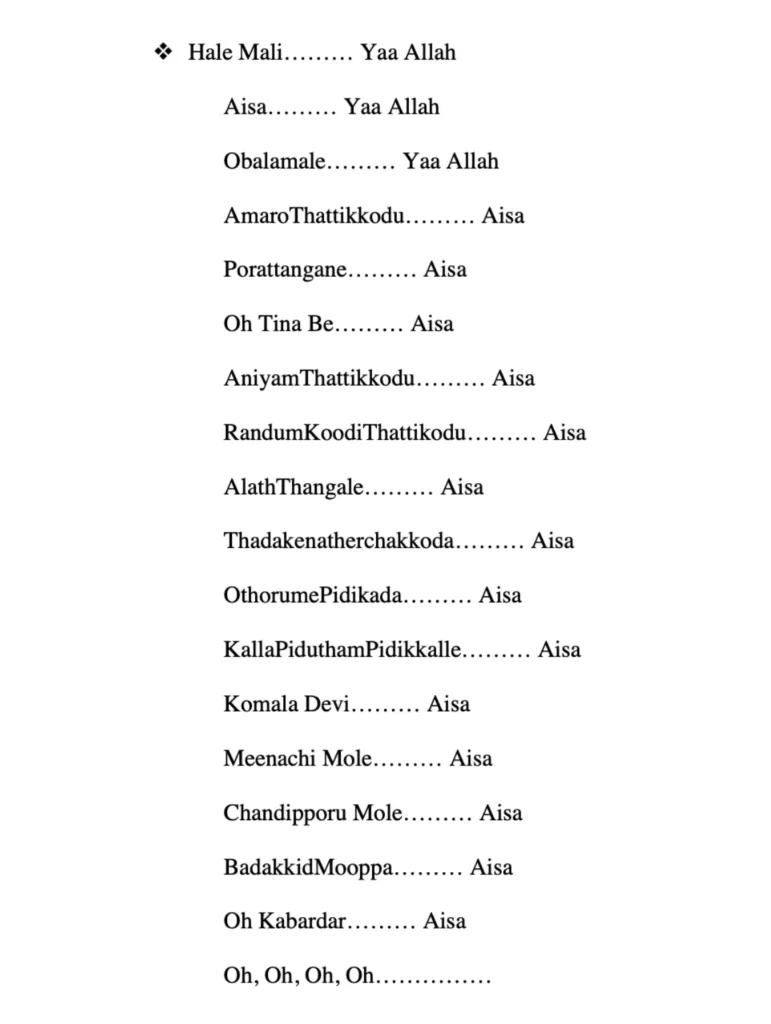
Traditional Songs of the Malabar Khalasis
One interesting part of their work is the Khalasi songs, rhythmic chants sung while pulling heavy vessels. These songs help the workers coordinate their movements, pulling together at the right moment.
Built by Hand, Without Blueprints
An Uru has no blueprint.
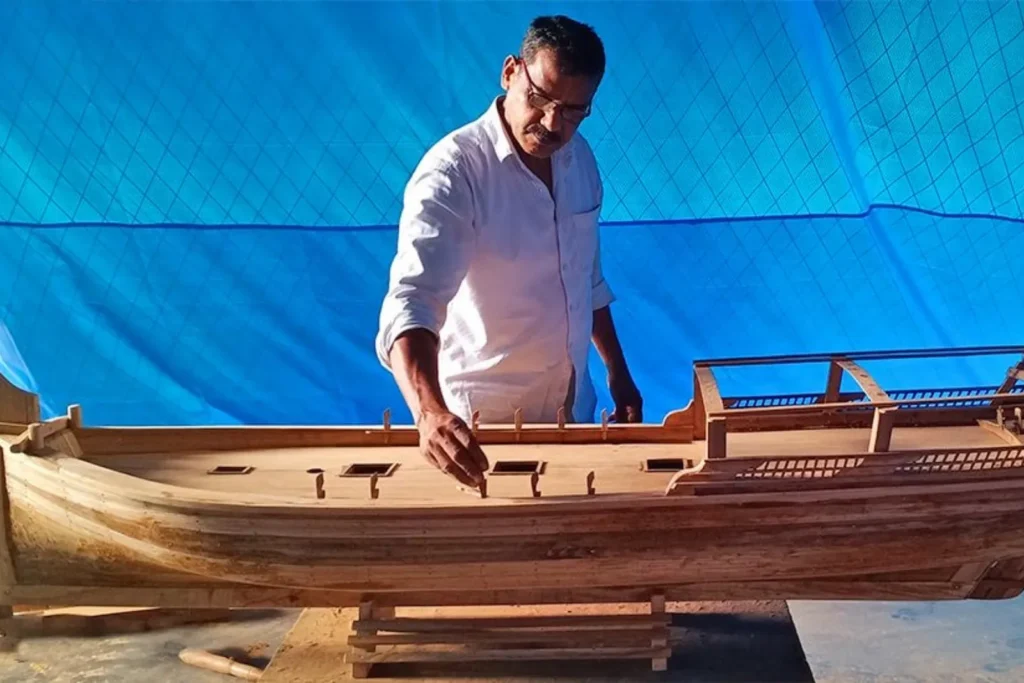
No drawings, no sketches, no work plan. The master carpenter, the maistry, carries the whole design in his head and gives his workers instructions day by day. The chief carpenter of the Al Rahi said the same: the master plan lives in the maistry’s mind.
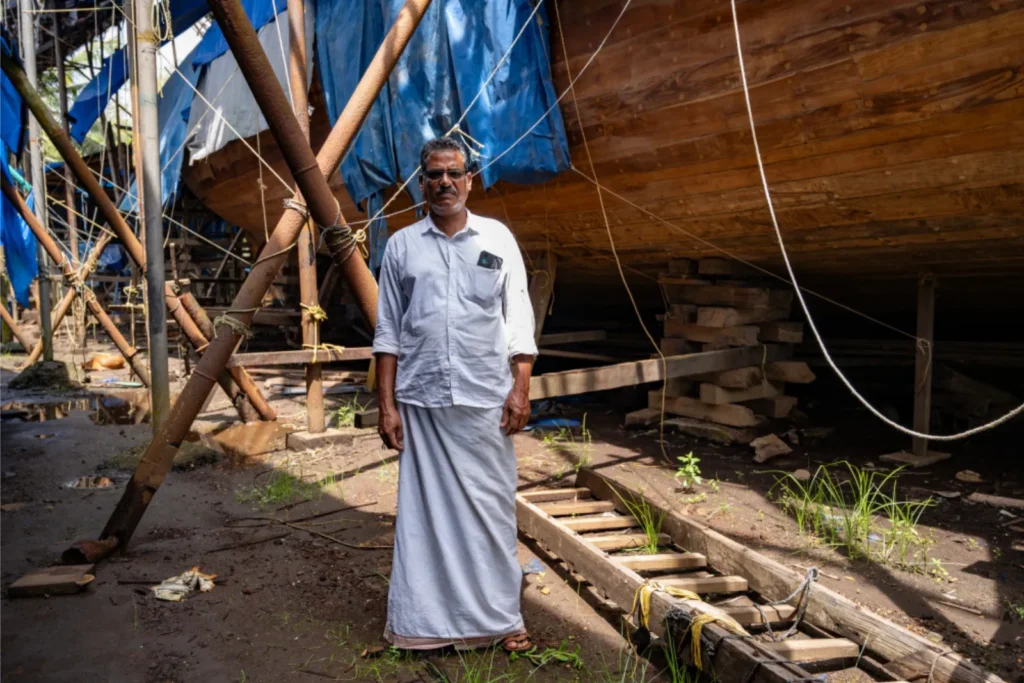
Sathyan Edathodi, a traditional Uru shipbuilder from Beypore, standing beside a wooden dhow under construction.
The Hidden Dhow Museum in Calicut
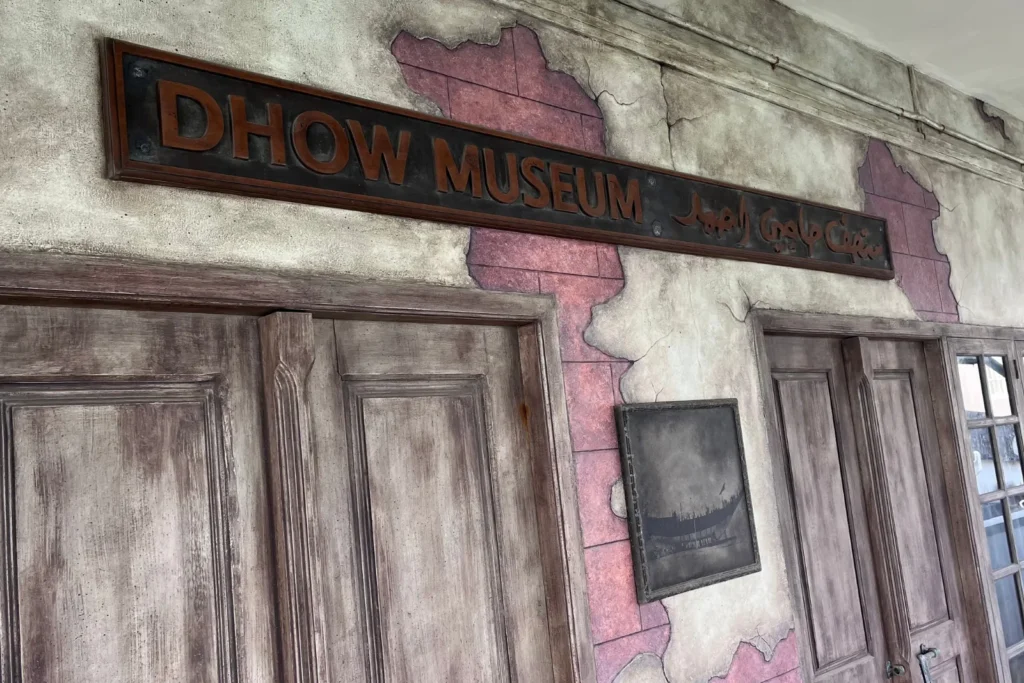
While exploring the history of Uru making in Beypore, I came across another interesting place in Calicut — the Dhow Museum.
It’s a small, privately maintained museum that many travellers might not even know exists. The museum is connected to the family of Haji P. I. Ahamed Koya, whose shipbuilding business dates back to 1885.
The Dhow Museum in Calicut, a private collection preserving the shipbuilding history of the Haji P. I. Ahamed Koya family.
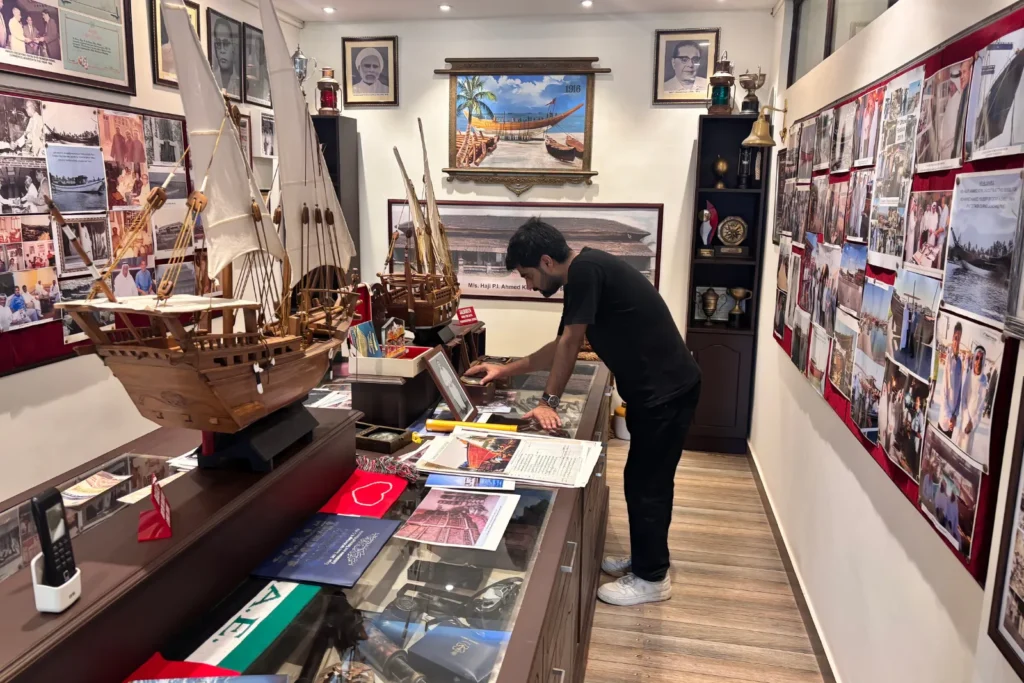
Inside the Dhow Museum, I found myself surrounded by old photographs, newspaper clippings, documents, and beautifully crafted wooden ship models.
It’s a small room, but there’s so much to look at. Every wall seems to have something to tell about the people who built these ships and their journeys across the Arabian Sea.
What caught my attention most were the detailed dhow models and the photographs collected over the years. Looking through them, I began to understand how closely the shipbuilding families of Calicut and Beypore were connected to the Arabian Gulf, especially Qatar.
Inside Calicut’s private Dhow Museum, where generations of shipbuilding history are preserved.
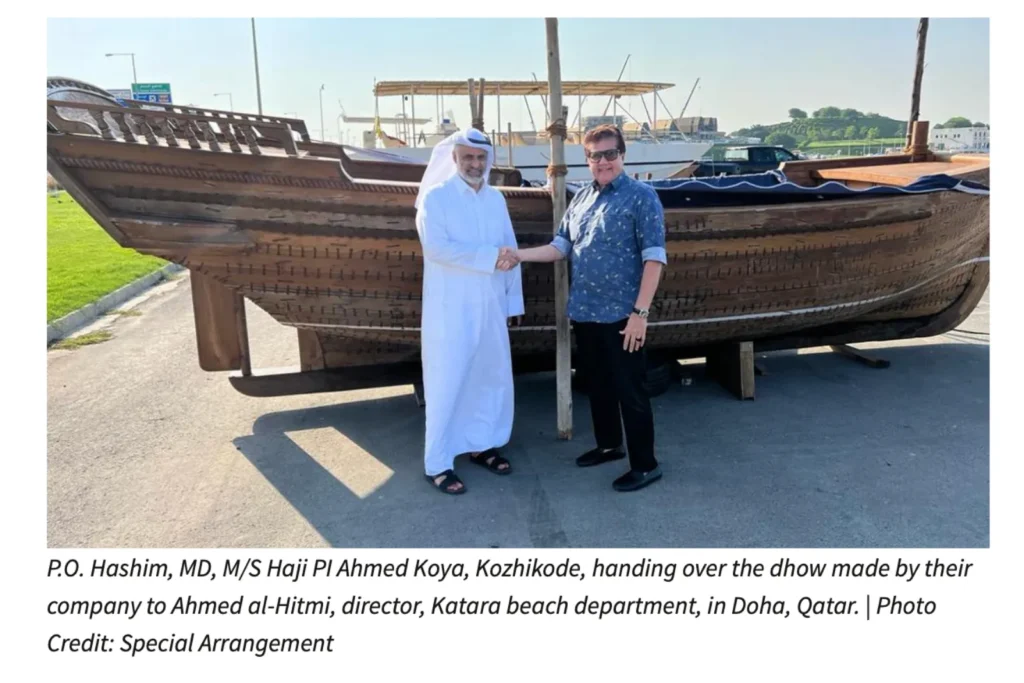
P. O. Hashim of Haji P. I. Ahamed Koya’s shipbuilding company built this traditional wooden dhow for Qatar’s FIFA World Cup 2022 celebrations, continuing the maritime connection between Kerala and Qatar.
Qatar’s Royal Families and the
Wooden Ships of Beypore
What made Qatar’s royal families turn to a small shipbuilding town in Kerala?
It all started with a conversation. Sathyan Edathodi, who was working in Qatar, introduced Beypore’s traditional wooden Urus to a captain working for the Qatari royal family. That conversation eventually led to an order in 2011, giving Beypore’s struggling shipbuilding industry a new opportunity.
Since then, according to Edathodi, at least one Uru has sailed from Beypore to Qatar every year, continuing a centuries-old maritime connection between Kerala and the Gulf.
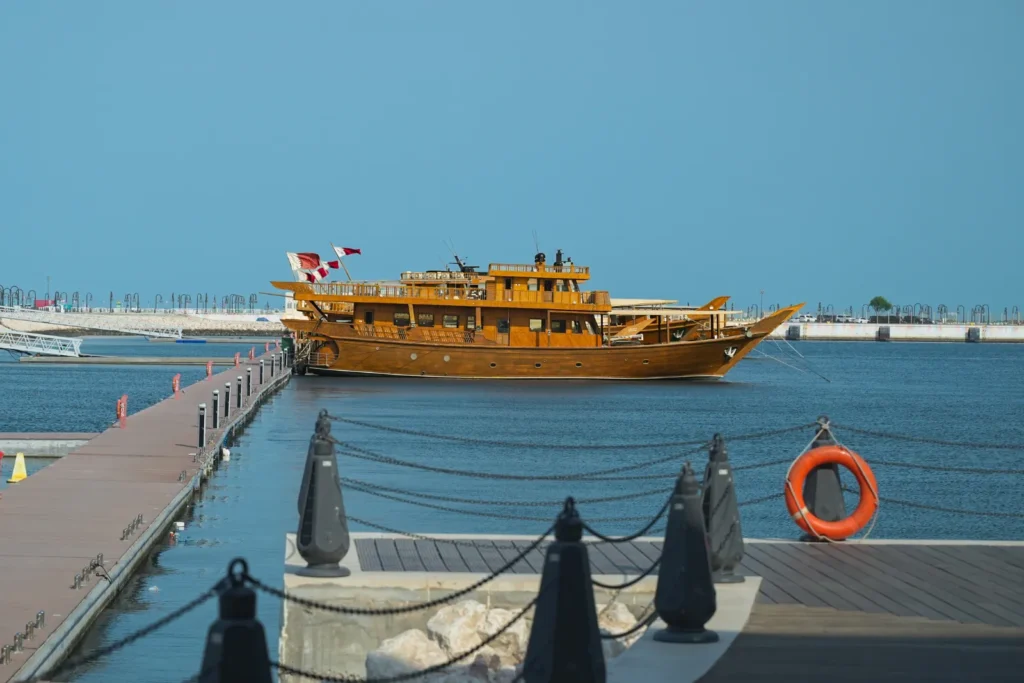
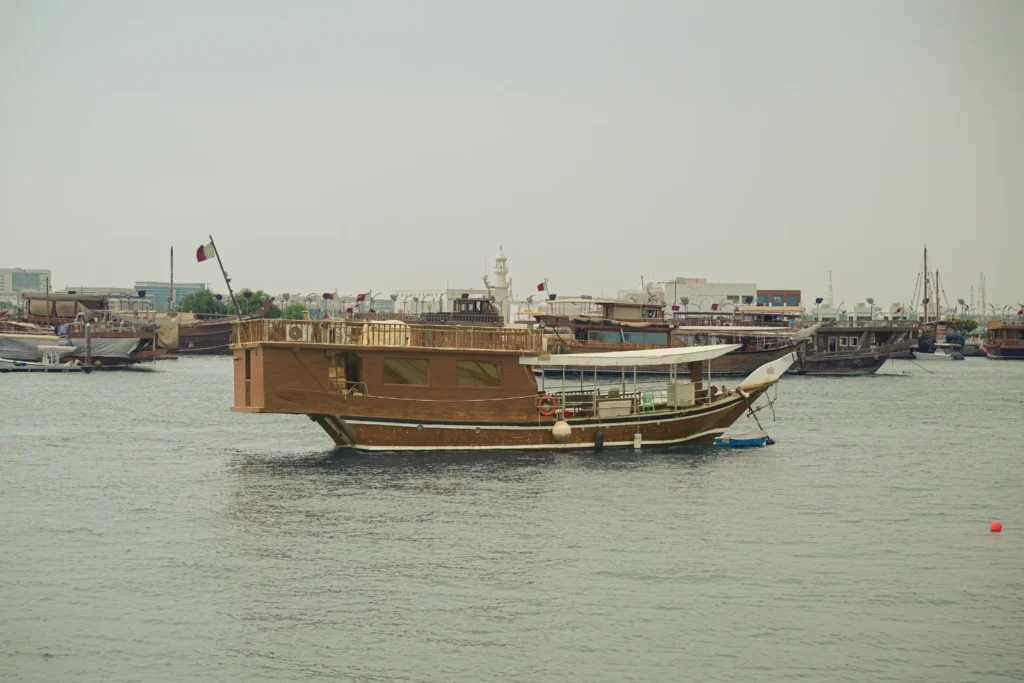
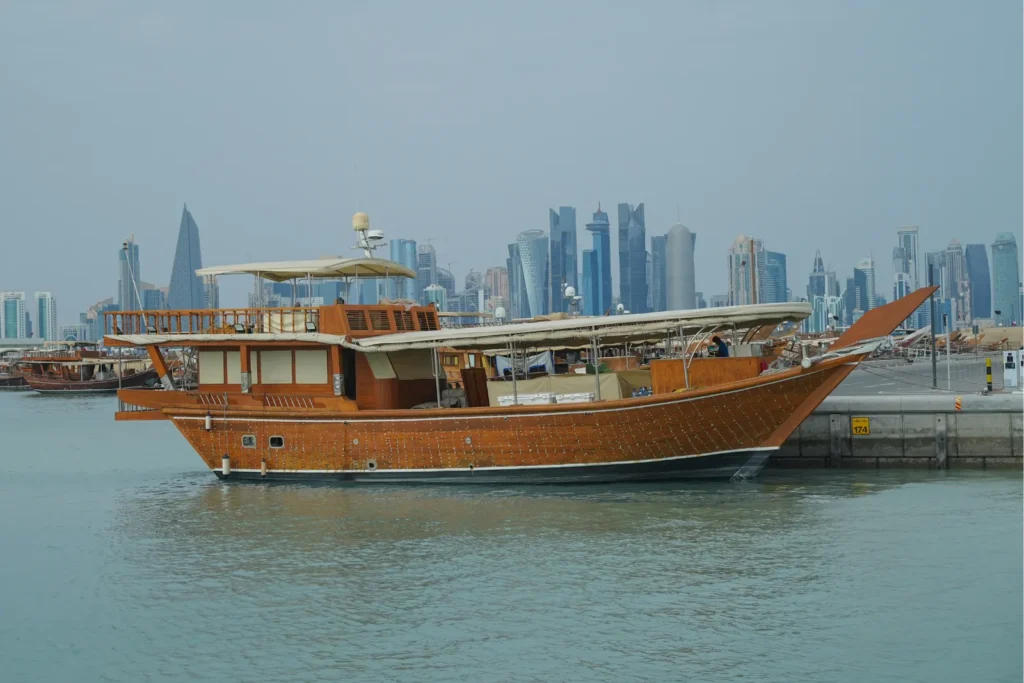
A luxury wooden dhow moored at Doha Old Port.
A traditional wooden dhow near MIA Park, Doha, reflecting Qatar’s maritime history.
Where Can You Still See Traditional Dhows in Qatar?
Traditional dhows are not difficult to find in Qatar. Some are still floating in Doha’s waters, while others have found their way into museums, exhibitions and even the small shops of Souq Waqif.
If you’re interested in these wooden boats, there are a few places worth exploring.
Katara Traditional Dhow Museum
Souq Waqif
MIA Park and Dhow Harbour
Old Doha Port (Mina District)
Doha Corniche
Katara Traditional Dhow Museum
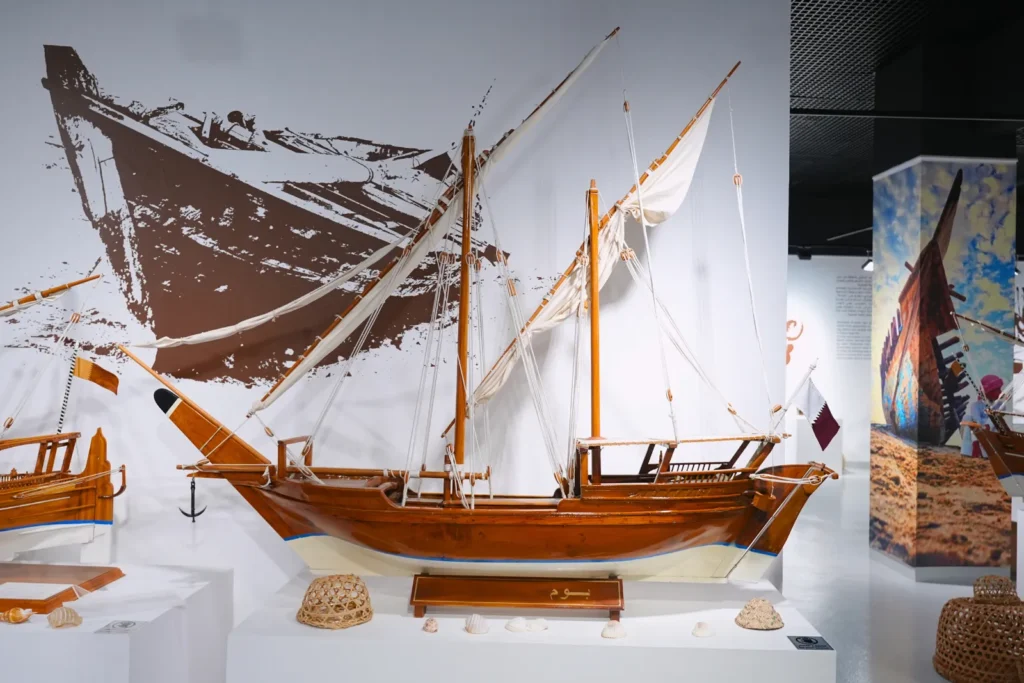
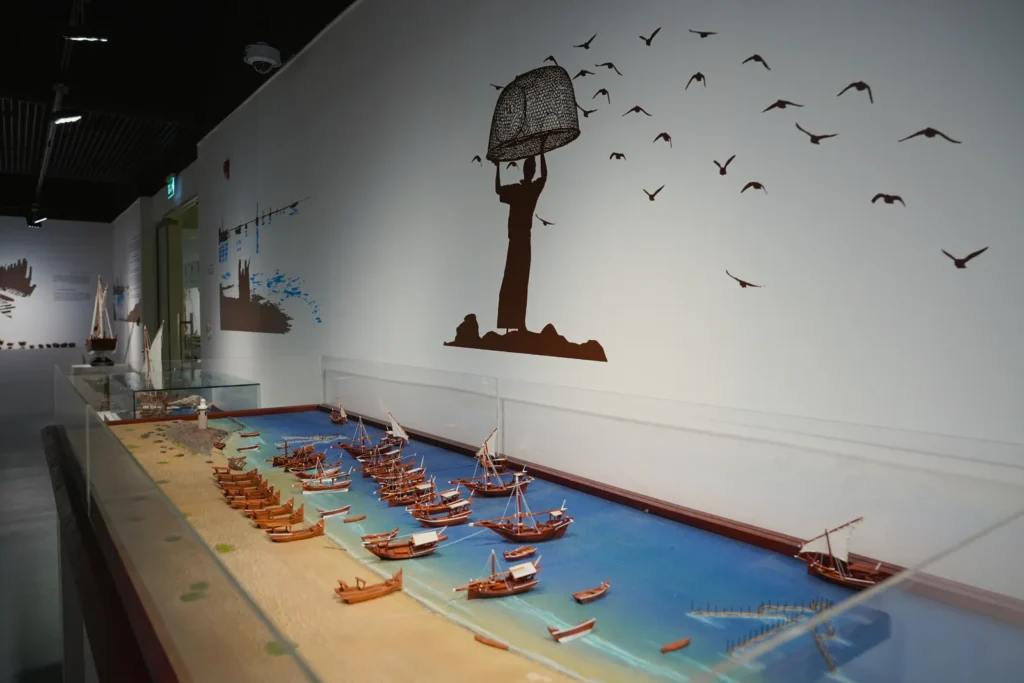
The Katara Traditional Dhow Museum is a place to learn more about Qatar’s connection with the sea. Inside, you can find traditional boat models, maritime tools and objects related to pearl diving and shipbuilding. It offers a closer look at the boats and the people who once depended on them for their livelihoods.
A traditional Boom dhow model displayed at the Katara Traditional Dhow Museum, Doha.
Souq Waqif
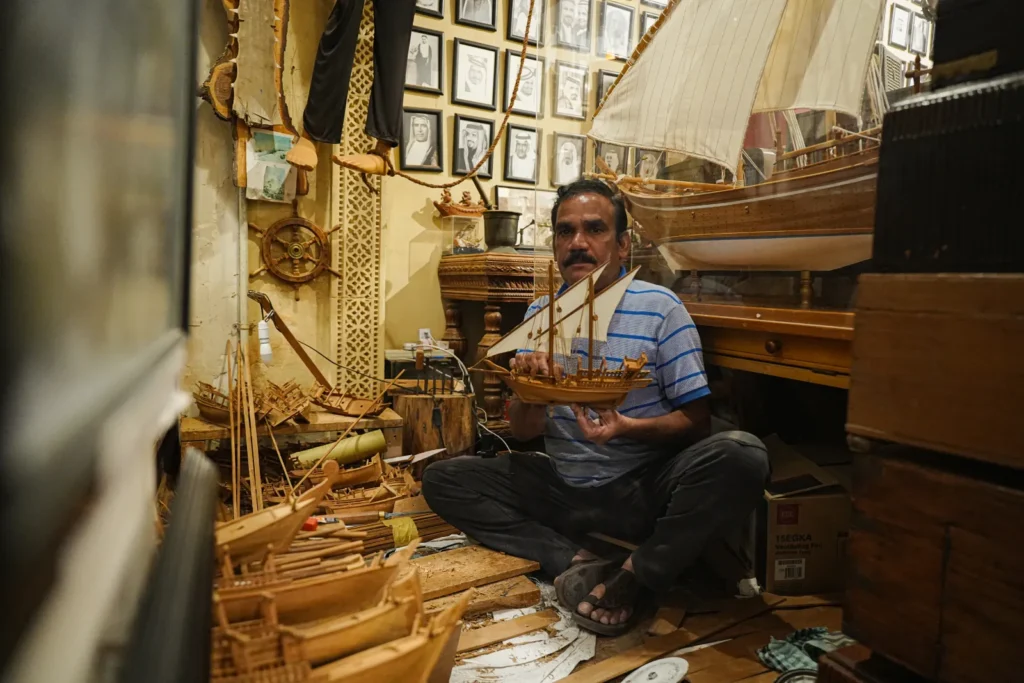
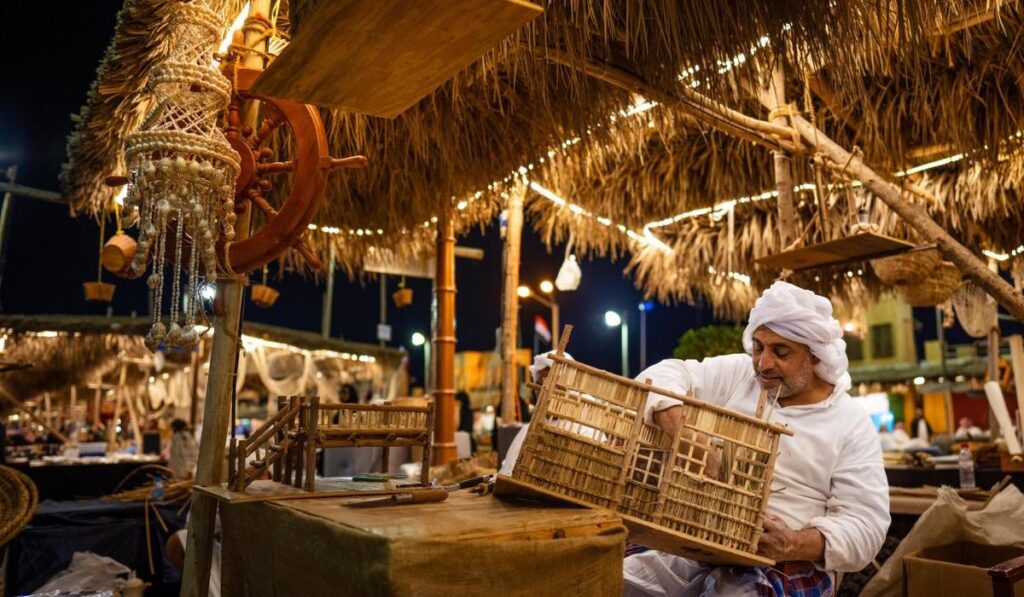
At Souq Waqif, you can see traditional wooden dhows in miniature form. Some handicraft shops display handmade models, carefully crafted with wooden hulls, sails and ropes. You might even come across craftsmen working on these little boats, giving you a closer look at the skills involved in dhow making.
A closer look at traditional dhow models and the craftsman’s workspace inside Souq Waqif.
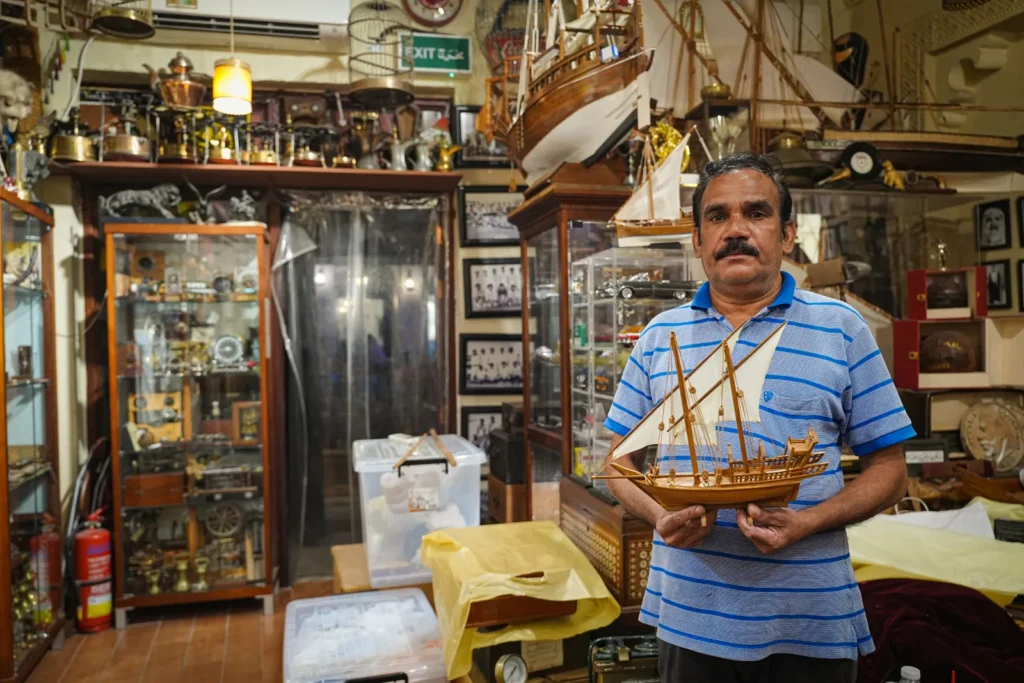
A craftsman, who is also the brother of Sathyan Edathodi, holding a handmade miniature wooden dhow at Souq Waqif, Doha.
MIA Park Dhow Harbour
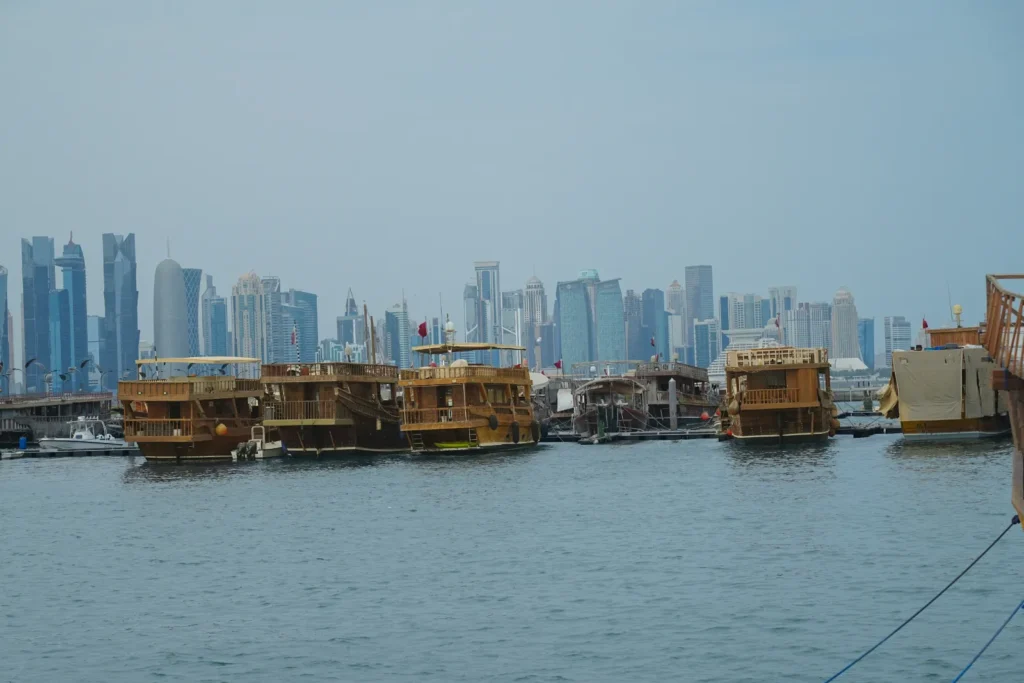
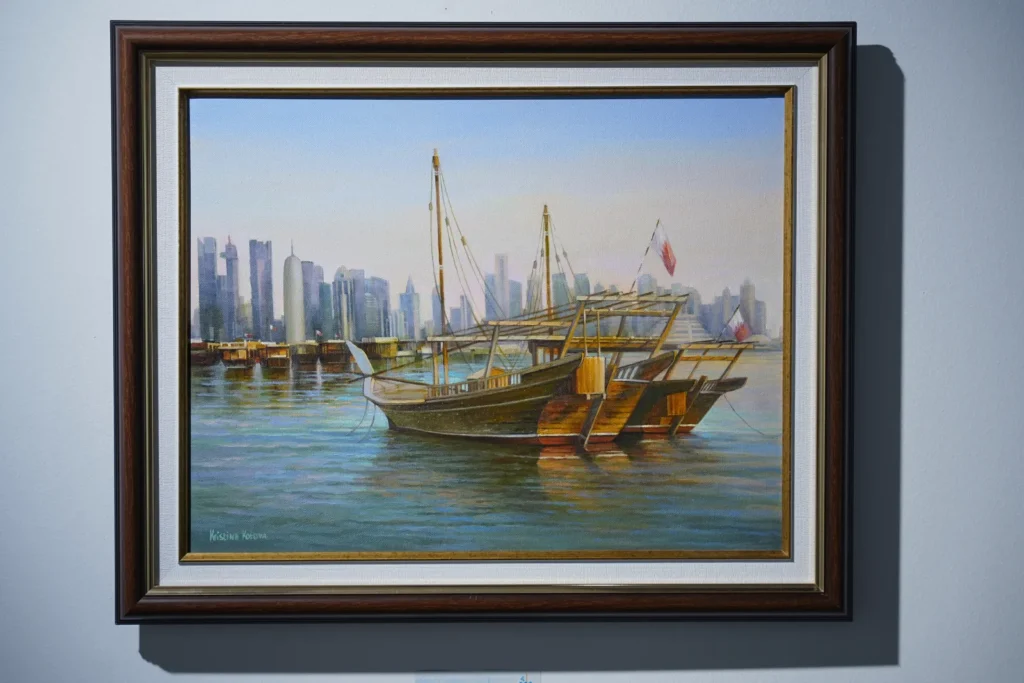
Near MIA Park and the Museum of Islamic Art, you can see traditional wooden dhows lined up along Doha’s waterfront. Many of these boats are now used for cruises around Doha Bay. With the modern skyline of West Bay in the background, it’s an interesting place to see how Qatar’s old wooden boats remain part of the city today.
Traditional wooden dhows moored near MIA Park, with Doha’s West Bay skyline in the background.
Old Doha Port ( Mina District)
At Old Doha Port, you can see luxury wooden dhows alongside modern yachts. A walk through Mina District shows how these traditional boats have adapted to modern life while keeping their original design.
A luxury wooden dhow moored at Doha Old Port.
Why Qatar Still Turns to Beypore for Wooden Dhows
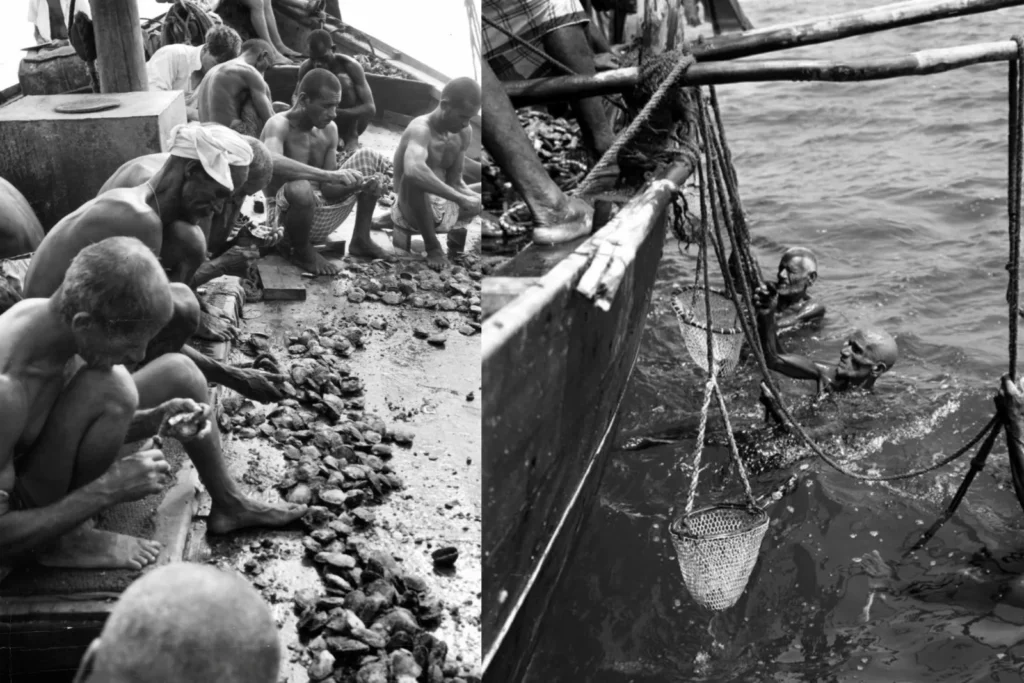
Before oil and gas transformed Qatar, the sea was an important part of everyday life. People depended on wooden dhows for pearl diving, fishing, trade and travelling between coastal towns. These boats also connected Qatar with India, bringing timber, spices, textiles and other goods across the Arabian Sea.
Today, Qatar no longer depends on dhows in the same way. But the boats still have a place in the country’s culture.
Historical pearl divers working on wooden boats
This is where Beypore comes into the story.
The shipbuilders of Beypore have passed down their knowledge of wooden Uru construction through generations. Their ability to build large wooden vessels using traditional methods has attracted customers from Qatar, including members of the royal family.
A painting of traditional wooden dhows in Doha, with the West Bay skyline behind them.
Katara Traditional Dhow Festival: Keeping the Old Boats Alive
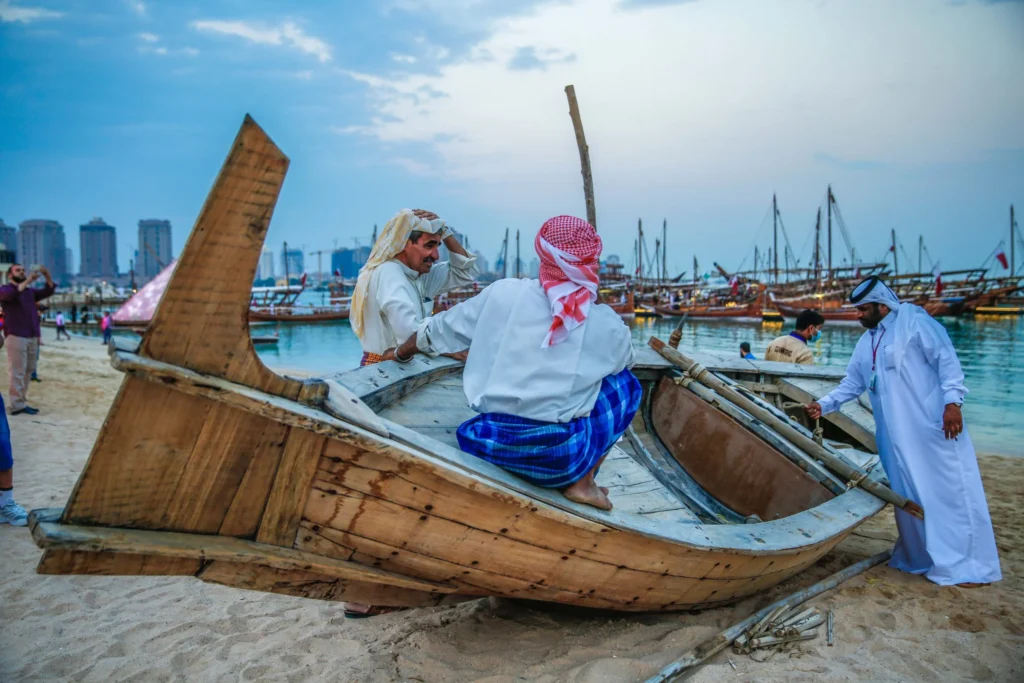
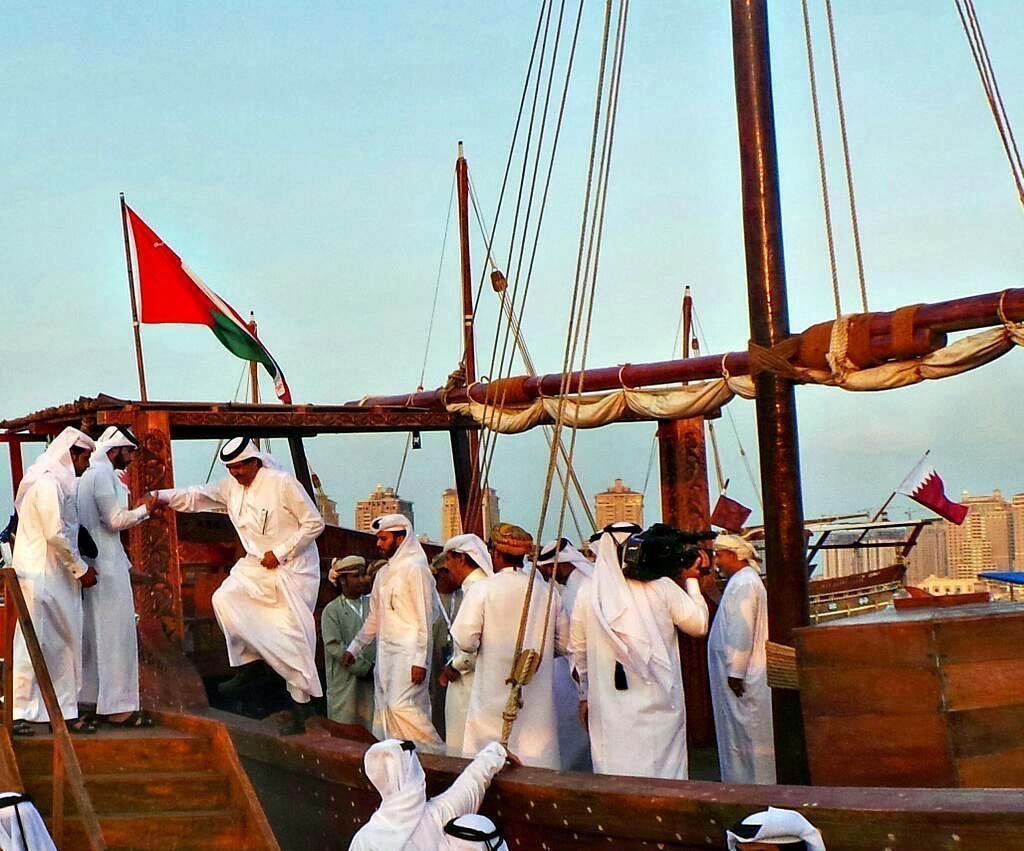
Every year, Katara Cultural Village in Doha hosts the Traditional Dhow Festival, bringing together wooden boats, shipbuilders and maritime traditions from Qatar and other countries.
Photographs from the Katara Traditional Dhow Festival, Qatar. (Source: Doha News)
What makes this festival interesting is that India is also among the participating countries. The 2025 edition brought together 12 countries, including India, showing how maritime traditions connect Qatar with places beyond the Gulf.
For me, this brings the story back to Beypore. The wooden ships built along Kerala’s Chaliyar River are part of a much wider history of trade and travel across the Arabian Sea. The festival is another reminder of why these boats still matter to Qatar, even though their everyday purpose has changed.
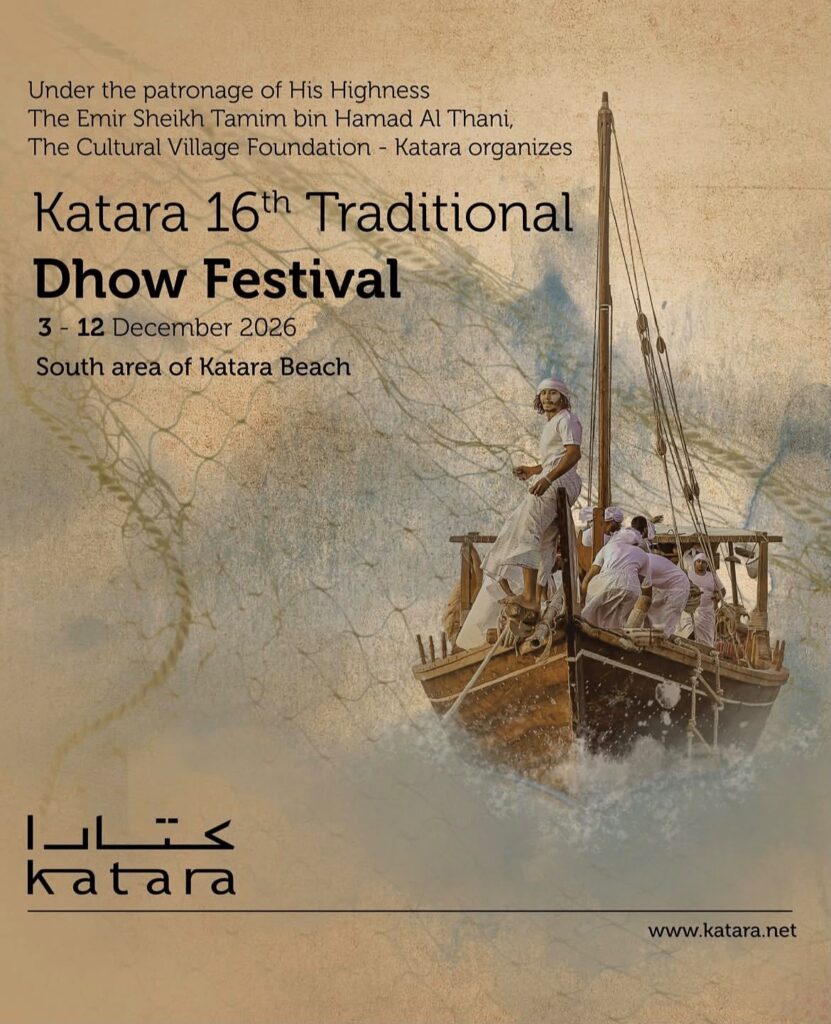
Official poster of the 16th Katara Traditional Dhow Festival, taking place from 3–12 December 2026 at Katara Beach, Doha.
This year, the Katara Traditional Dhow Festival will take place from 3 to 12 December 2026 at Katara Beach, Doha. The festival brings together traditional wooden dhows, shipbuilding demonstrations and maritime activities that tell the story of Qatar’s connection with the sea. It’s also a chance to explore the maritime traditions shared by Qatar and India, including the wooden shipbuilding skills still practised in Beypore.
Conclusion
For me, this story is more than just about wooden ships. It’s about two places, Beypore and Qatar, connected by the sea and the hands of skilled craftsmen. Every time I see a dhow in Doha, I think of the people back in Kerala who keep this tradition alive. Somehow, these wooden boats make the distance between the two places feel a little smaller.